
In 2018, Barry Estabrook published the third edition of his book Tomatoland: From Harvest of Shame to Harvest of Hope, where he gives his readers a comprehensive insight into the philosophy of agribusiness, the evolution of the production of tomatoes, and agricultural labor relations. Estabrook began this tomato heavy text by asking a simple question, “Why can’t (or won’t) modern agribusiness deliver a decent tasting tomato?” (Estabrook xvi). What he discovered was incredible innovation and horrifying labor conditions, taking his readers on a journey through the two-sided character of capitalism.
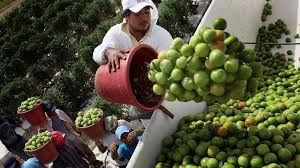
The economic system of Capitalism raises the quality of life for millions of people around the world, while simultaneously tarnishing the quality of life for many more. Capitalism has allowed for fresh tomatoes to be sold in New England grocery stores in the dead of winter, which through a historic lens is a large achievement. Yet, Estabrook began questioning who it was that was growing these tomatoes all year-around so that we may have salsa during a blizzard. What Estabrook discovered is horrifying; and that statement is not hyperbolic in the slightest. The conditions that the field laborers endured was right out of a dystopian novel. When he visited a major farm in Florida, he saw a sign saying that the “…field had been sprayed by no fewer than thirty-one different chemicals” all regarded as highly toxic exposing the laborers to “developmental and reproductive toxins” (Estabrook 36). Yet, the field hands were ordered to pick the fruit in violation of REI regulations. While this essay can only dedicate enough words for one story, it certainly depicts the conditions that these folks suffer through. Three pregnant women resided on this farm as field workers, with all of their due dates lining up. The first child was born with a deformity of the lower jaw where he was constantly at risk of choking to death by swallowing his own tongue. A few cabins over, another woman gave birth to a baby with an extremely rare condition called Tetramelia syndrome, which left the boy with no arms or legs. The last women gave birth to her daughter two days later, where the baby had one ear, a cleft palate, one kidney, no nose, no anus, and no visible sexual organs. Unfortunately, the baby girl died just three days after birth. One may ask why didn’t these laborers know the risks and if they did, why didn’t they just say no? Most of the field workers do not know English and a lot of them are still speaking Xincan or other indigenous Latin American languages and living in extreme poverty. (I can confirm after working for a NGO in Guatemala for three months that there are loads of people still speaking these languages making them easily exploitable even by those who speak Spanish). These folks are hired due to their extremely exploitable situations. At times they are explained the risks, but in English, which has little to no value. They provide these folks housing but at a financial cost that is impossible to pay back with the wages they receive, thus forcing them into modern-day wage-slavery. These laborers are promised good work and the ability to live in America but are going in unaware of the consequences of saying yes to the job. The tomato is a perfect product to illustrate the duel nature of capitalism. You can go to fast-food joint anytime of the year and have a tomato slice on your burger or tomatoes in your salad in the winter, but the cost is at times slavery and at the very least, thousands of people enduring hell on earth.
Before the essay depicts the hopeful side of Estabrook’s book, we must take a look at the economic theories that make this possible. It should be known that Savvy capitalists have an unyielding desire for profit. The system as a whole is often geared around seizing upon potential sources of greater profit. Estabrook brilliantly depicts in his writings of the tomato industry and agricultural labor relations, the area of economic thought where Karl Marx and Joseph Schumpeter’s views align. In the 19thcentury, Marx wrote about the fetishizing of particular commodities, which still occurs today, especially with the tomato. The fetishizing of tomatoes is not that folks find the tomato sexually stimulating (although some foodies might) it is the practice where every aspect of production is not viewed as relations amongst people but rather relations amongst money and commodities, which are in turn exchanged in the markets. Schumpeter in the 20thcentury wrote of the Creative Destruction that occurs within capitalism. The consumer’s desire for innovation is one of the principle fuels to capitalism. This incentive to create new goods, new methods of production, and even new markets with more advanced forms of organization, is an integral part of the longevity of capitalism. Mutations in the production process revolutionize the product (and the industry it is within); destroying the old ways of production, only allowing for the new form to survive. Schumpeter stated that “This process of Creative Destruction is the essential fact about capitalism” (Schumpeter Creative Destruction). Once the fetishism of tomatoes occurred revolutions in the production process followed. Estabrook discusses how tomatoes are not ideal for transportation due to their fragile nature and short harvest season. Eventually, agribusiness discovered that one could pick the tomatoes before they were ripe and dowse them in ethaline gas to finish the ripping process and create that bright red aesthetic that we all know and love. This practice drastically elongates the time frame that tomatoes can be sold and how far north they can be brought. The ethaline gas is not the only innovation that allowed for us Americans to enjoy tomatoes all year around. Many of these large firms have structured their narratives in ways so appealing that even our own government funds them. Organizations such as the Rick Center, a tomato genetics resource center, is funded by the United States Department of Agriculture, The California Tomato Research institute, and UC Davis. The Rick center provides premium genetic recipes for tomatoes so that growers can create large, durable, and uniform shaped tomatoes perfect for shipping (should be noted that taste is often not regarded as a genetic trait worth preserving).
Most people view food as the essential nutrients required to survive; big agribusiness views our biological dependency on food as the ultimate source of profit. Because our mortal bodies require consistent nutritional intake, we rarely in America ask or even care where these nutrients come from. This is where the positive side of Estabrook book comes in, or as he calls it, the Harvest of Hope. In Florida there exists an organization known as the Coalition of Immokalee Workers (CIW)that fights tooth and nail to protect workers right and raise the labor conditions as a whole. Estabrook spent a great deal of time with these dedicated good Samaritans. Yet, they do not operate on a hunch. Many of them, prior to their CIW employment, worked in the actual fields under the oppressive conditions that they are fighting against. The CIW efforts began on a relatively small scale, providing resources to the field laborers on tomato farms and raising awareness to the brutal conditions that these folks were under. They eventually reached a global scale, creating the Fair Food Program, a campaign for fair food and to end modern-day slavery. The Fair Food Program created a contract in Florida where major tomato producers and retailers sign and uphold the labor standards that the CIW requires. If a retailer does not wish to sign the contract, that is there choice, but they will not be able to buy tomatoes from any farm that did sign it, and vice-versa. Part of the contract requires that the farms pay the field workers an extra penny per pound of tomatoes they pick. One may think that insignificant, but one tomato picker said to Estabrook, “But to us it’s a lot. You can say to yourself, now I can get this little something… or buy my kids and ice cream cone… The work is still hard. It will always be hard work…but now there is respect” (Estabrook 167). Another requirement of the Fair Food Program is that the laborers are paid minimum wage with accurate time keeping ensuring that they are paid fairly. The CIW has gotten major companies to sign the contract, such as Walmart and Burger king, but there are unfortunately still major companies such as Wendy’s that refuse. What the CIW did was create a common rule, a set precedence, for how field laborers must be treated, allowing the laborers to go home at the end of the day with a dignified job.
The CIW model has a promising future. As of now, the program revolves around agricultural labor relations. But agribusiness is not the only industry creating oppressive labor conditions. This idea of a common rule for labor standards could be applied in other industries and in other countries. As of yesterday (6-16-19) Independent Australia, a journal of democracy and independent thought, published their support for the Fair Food Program. People all around the world are beginning to realize that a fresh tomato (for example) is not worth slavery. People are being educated on the duel nature of capitalism and taking the steps to create a better form of capitalism. The future of the tomato industry can maintain this creative innovation in the fields of genetics, horticulture, and labor relations, however, it still may face the destruction side of ‘creative destruction’. Innovations in hydroponics and large-scale greenhouses seen in Western Europe could eventually prove to be a cheaper alternative then the traditional field tomatoes. It is unclear if capitalism can ever rid itself of the destruction side of creative destruction. Schumpeter viewed markets through an evolutionary lens going through rapid natural selection. One does not look back at our ancestors and say ‘man, I really wish the Homo Habilis was still with us today’. Innovation will always destroy its predecessor. Prior to the light bulb, hundreds of thousands of people were dependent upon their wage-based job of lighting the lamps at nightfall in every major city. Edison’s invention may have lit up households and city streets, but it left thousands in the dark. We must strive to make capitalism more inclusive and allow for a cultural change to occur, where labor unions and co-ops are the norm, not the exception. A capitalism where the populous is educated and well-trained, where if their industry is becoming primitive, they have access to training and possess the skills to adapt rather than fall behind. To create a capitalism that works with and for everyone, not just the few in their corner offices.